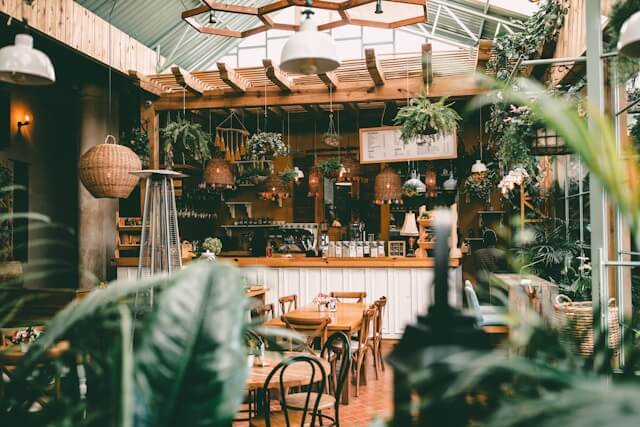
Coffee is the most habit-driven purchase on the high street: the same faces, at the same hours, almost every day. That frequency is exactly what makes a coffee shop loyalty program work — and it's also why the classic paper punch card sells your shop short. Paper gets lost, forgotten and washed with the jeans, and it tells you nothing about the people holding it.
A digital loyalty card fixes both halves. The card lives in your customer's Apple or Google Wallet, so it can't be lost — and every stamp becomes a time-stamped visit you can actually learn from. This guide covers the setup, seven mechanics that work in coffee, and how to measure the results honestly.
Why coffee shops are built for loyalty
A regular who stops by four times a week makes around 200 visits a year. No other local business sees its best customers that often, which means small nudges — one extra visit a week, one friend brought along — compound faster in coffee than anywhere else.
Industry studies regularly estimate that repeat customers account for well over half of a café's revenue. Exact figures vary by shop and by study — treat any number like that as an estimate — but the direction is consistent: regulars are the business. A loyalty program is how you stop treating them anonymously.
The classic card, minus the paper
The buy-9-get-the-10th-free stamp card has survived for a reason: both sides of the counter understand it instantly. Kardly keeps the mechanic and moves it into the wallet:
No app to download. Customers scan a QR code once and the card lands in Apple Wallet or Google Wallet.
A two-second stamp. Staff scan the customer's pass at the register — no codes to type, no new terminal to install.
It can't be lost. The card lives on the phone your customer already checks a hundred times a day.
Your branding. Colors, logo and the reward rule are yours to define.
Every scan is a data point
Here's what paper can never do. When stamps are digital, each one is a visit record tied to a member — and a month of stamps turns into a picture of your customer base:
Repeat-visit rate. How many of your members came back this week, and how that trends over time.
Visit patterns. Which hours and days your regulars actually show up — the morning-rush crowd and the weekend crowd are usually different people.
At-risk regulars. The customer who came twice a week and hasn't scanned in three weeks is quietly churning. A list of overdue regulars is the single most actionable report a café can have.
Campaign effect. Run a double-stamp week and watch what it actually did to repeat visits — not what you feel it did.
Kardly's analytics are visit-based: we count scans, not dollars, and no POS integration is needed. Where you see revenue math in this guide, it's an estimate to sanity-check an idea — not a number a dashboard will promise you.
Seven mechanics that work in coffee
The classic. Buy 9, get the 10th free. Start here; everything below layers on top.
Birthday stamp. A free drink or an extra stamp in the birthday week — cheap, personal, remembered.
Slow-hour double stamps. Double stamps between 2 and 4 pm give the afternoon lull a reason to exist.
Streaks. An extra stamp for visiting every week for a month — habit reinforcing habit.
Referral. A stamp for bringing a friend who joins the card — your regulars become your acquisition channel.
Win-back. When an overdue regular finally returns, welcome them with a bonus stamp instead of pretending nothing happened.
Launch push. Double stamps for the first two weeks get the card past the awkward empty-wallet phase.
Set it up in an afternoon
Design the card. Logo, colors, number of stamps, the reward. Ten minutes, self-serve.
Put the QR code where people wait. By the register, on the pickup counter, on the door.
Customers scan once. The card lands in their wallet — no app, no long forms.
Staff scan to stamp. From any phone. That's the whole operational change.
From there, the dashboard fills itself: members, visits, redemptions, and the patterns behind them.
Measure it honestly
Give the program four to six weeks, then look at three numbers: how many members joined, how often they come back (your repeat-visit rate), and how many rewards were redeemed. Redemptions are a cost — but a redeemed reward is proof the loop works.
Wallet loyalty programs are often estimated to lift repeat visits by roughly 10–20%. That's an estimate, not a promise — your result depends on your baseline, your reward, and whether staff stamp consistently. The honest way to use a number like that: treat it as a hypothesis, and check it against your own dashboard.
A worked example
An illustrative scenario, not a case study: a neighbourhood café launches a 9+1 card with a QR by the register. In the first month, 120 customers join. The dashboard shows a Tuesday-morning regulars cluster, a weekend crowd that behaves completely differently — and 14 members who used to come weekly and have gone quiet. The owner sends those 14 a win-back offer; if even a third of them return, that's five regulars rescued for the cost of a few free coffees.
Frequently asked questions
Do my customers need to install an app?
No. The card is added straight to Apple Wallet or Google Wallet from a QR code. Google Wallet ships pre-installed on Android, and Apple Wallet is built into every iPhone.
How is this better than my paper punch card?
Three ways: the card can't be lost, you can reach a card that lives in the wallet with updates and offers, and every stamp becomes data — repeat rates, visit patterns, overdue regulars — that paper physically cannot give you.
How much work is it for my staff?
One scan at the register, about two seconds. There's no terminal to install and nothing to reconcile at close.
What does it cost to start?
You can build the card and go live the same day, self-serve — no demo call. Current plans are on the pricing page.
Ready to know your regulars? Create your coffee shop's loyalty card, put the QR by the register, and let the scans do the reporting.